
WELCOME BONUS 300%
UP TO €2000 + 100
FREE SPINS
UP TO €2000 + 100
FREE SPINS
Home → Blackjack
Blackjack at Locowin Casino: Variants, Rules and Payouts
Split, Double Down, and Surrender in Numbers
The Infinite Blackjack table by Evolution offers an RTP of 99.47 percent with bets ranging from 1 to 5,000 EUR, providing unlimited seats for participants who seek high-stakes action without physical limitations at the virtual felt. This configuration allows players to utilize advanced tactics like splitting pairs or doubling down on any two cards while enjoying the seamless integration of live dealer interaction for a realistic gaming atmosphere. The high maximum bet limit ensures that professional gamblers can wager significant amounts per hand, maximizing potential returns during winning streaks while maintaining a low house edge compared to standard digital versions.
Quantum Blackjack Plus Live from Playtech features quantum multipliers reaching up to 1,000x on three-card combinations totaling 21 points, significantly enhancing payout potential beyond standard rules where typical wins are capped at lower multiples. With an RTP of 99.57 percent under optimal strategy, this variant introduces volatile elements that can drastically alter outcomes, requiring players to adapt their betting patterns to capitalize on these rare multiplier events effectively. The ability to apply these multipliers to specific hands adds a layer of strategic depth, encouraging users to study probability distributions before committing funds to high-risk scenarios during peak gameplay sessions.
Lightning Blackjack by Evolution applies lightning multipliers up to 25x on winning hands, operating within a stake range of 1 to 2,500 EUR and offering an RTP of 99.56 percent for engaged participants. Unlike standard tables, this version integrates random multiplier assignments that transform ordinary victories into substantial payouts, demanding careful bankroll management to withstand variance during dry spells when no multipliers activate on successful rounds. The unrestricted player count ensures quick game flow, allowing individuals to experience these dynamic multiplier mechanics frequently without waiting for seats to open up in crowded virtual environments designed for mass participation.
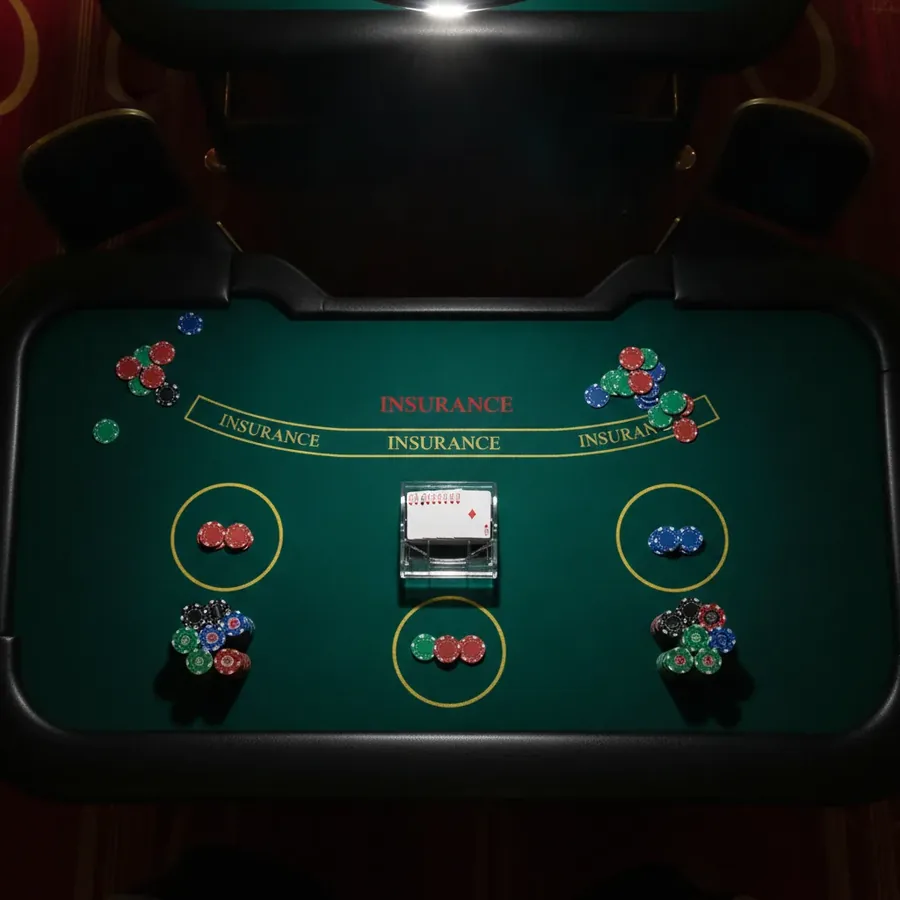
No Double Down on three cards
Blackjack Surrender (Late Surrender) permits players to forfeit half their bet after the dealer checks for blackjack, improving the overall RTP by approximately 0.08 percentage points through reduced exposure to unfavorable starting hands. This rule modifier is less valuable than early surrender, which can reduce the house edge by up to 0.6 percentage points, but it remains a critical tool for minimizing losses during statistically disadvantageous situations encountered frequently in long playing sessions. Players must decide quickly whether to continue playing or cut losses, as the option expires immediately once the dealer confirms they do not hold a natural twenty-one card combination during the initial deal phase.
The standard 6-deck game with S17, DAS, DOA, and 3:2 payouts yields an RTP of 99.54 percent, provided players adhere strictly to basic strategy charts that dictate optimal moves for every possible hand configuration against dealer upcards. Deviating from these mathematically proven decisions increases the house advantage significantly, eroding potential profits over time due to suboptimal choices made under pressure or misunderstanding of probability theory governing card distribution dynamics across multiple decks. Strict adherence ensures the theoretical return is achieved, making disciplined play essential for serious enthusiasts aiming to preserve capital while navigating complex decision trees inherent in modern online casino environments.
Infinite Blackjack eliminates seating constraints, allowing unlimited participants to join the same table simultaneously, which streamlines gameplay and reduces wait times between hands compared to traditional brick-and-mortar establishments with fixed physical chair arrangements. This structural advantage supports faster decision-making cycles, enabling users to execute strategies like double downs more frequently without interruption, although the specific rule prohibiting double downs on three cards limits certain aggressive tactical approaches during favorable count scenarios. The absence of physical space limitations means the software handles all interactions digitally, ensuring consistent performance regardless of player volume while maintaining the integrity of live streaming technology used for real-time dealer communication.
While many variants allow doubling on any number of cards, strict rule sets often restrict this action to only two-card totals to maintain the intended house edge and prevent excessive risk-taking by inexperienced gamblers unfamiliar with variance principles. This limitation forces players to rely on hitting or standing decisions rather than leveraging the double-down mechanic to capitalize on strong positions, thereby altering the strategic landscape and requiring adaptation to different tactical frameworks established by regulatory bodies for fair play standards.
Blackjack Contributes Only 10 Percent to Wagering
Table games contribute just 10 percent toward fulfilling the 300 welcome bonus up to 2,000 EUR plus 100 free spins requirement, meaning players must wager ten times more on blackjack than on slots to clear the promotion conditions fully. For instance, generating 100 EUR in turnover via blackjack counts as only 10 EUR toward the total needed, forcing users to either switch to higher-contributing slot titles or accept prolonged engagement periods to satisfy the terms efficiently. This disparity significantly impacts bonus conversion rates, making pure blackjack strategies economically inefficient compared to hybrid approaches that mix high-contribution games with table play to optimize completion speed and resource allocation across diverse portfolios.
Given the 10 percent contribution rate, clearing a 40x wagering requirement on a 2,000 EUR bonus demands 80,000 EUR in actual blackjack turnover, whereas playing slots would require only 8,000 EUR due to their 100 percent contribution status. This mathematical reality discourages dedicated blackjack players from utilizing bonuses exclusively for table games, as the financial burden becomes prohibitive relative to the expected loss calculated using the respective house edges found in standard infinite blackjack configurations offered by major providers. Consequently, smart players allocate minimal stakes to tables while prioritizing slots to meet requirements quickly, reserving genuine blackjack sessions for recreational purposes outside promotional contexts where such restrictions do not apply.
The Insurance side bet, paying 2:1 when the dealer shows an ace, carries a steep house edge of 7.47 percent for six-to-eight deck games, rendering it one of the worst wagers available despite its attractive odds presentation to casual observers. Basic strategy universally recommends rejecting insurance unless counting cards reveals a true count of positive three or higher, a condition rarely met in standard shuffle algorithms employed by most online platforms serving international markets globally today. Accepting this bet unnecessarily drains bankrolls rapidly, especially when combined with low table contributions to bonuses, creating a compounding negative effect that accelerates fund depletion among unsuspecting participants seeking easy profit opportunities.
Place Side Bet before cards are dealt
Infinite Blackjack includes four distinct side bets—Any Pair, 21+3, Hot 3, and Bust It—which must be placed prior to the initial deal, adding volatility and potential high payouts alongside the main game action for adventurous participants willing to risk additional stakes. These auxiliary wagers operate independently of the primary blackjack outcome, offering separate win conditions based on specific card combinations rather than strategic play against the dealer’s hand structure, thus diversifying entertainment value beyond traditional victory scenarios alone. Understanding the distinct payout tables and probabilities associated with each option enables informed betting decisions tailored to individual risk tolerance levels and desired engagement intensity during extended gaming marathons.
Quantum Blackjack Plus Live enhances side bet opportunities through its unique quantum multiplier system, applying boosts up to 1,000x on qualifying three-card combinations totaling twenty-one points, dramatically increasing excitement and reward potential beyond standard expectations set by conventional formats. This feature transforms routine side bets into high-stakes events capable of delivering life-changing sums from modest initial investments, provided luck aligns with the algorithmic selection process governing multiplier activation timing and magnitude throughout the session duration. Players should monitor multiplier frequencies closely to adjust their side bet sizing dynamically, ensuring sustainable bankroll management while chasing these rare but lucrative jackpot-triggering moments during peak activity hours.
Lightning Blackjack similarly integrates side bet mechanisms enhanced by lightning multipliers reaching 25x on winning hands, operating within a restricted stake range of 1 to 2,500 EUR and maintaining an RTP of 99.56 percent for optimized participants. These multipliers apply randomly to completed hands, introducing an element of unpredictability that complements the structured nature of base gameplay, encouraging users to place larger side bets anticipating favorable multiplier activations during specific rounds of intense competition. Strategic placement involves balancing base game profitability with side bet exposure, recognizing that while multipliers boost wins, they also increase variance significantly compared to static payout structures found in older generation implementations.
Side bets generally carry higher house edges than the main game, meaning consistent reliance on them erodes bankrolls faster even if occasional large wins occur during special multiplier events triggered by proprietary software algorithms running behind the scenes constantly. Players should treat these options as supplementary entertainment rather than core revenue generators, allocating no more than five percent of total session funds to auxiliary wagers to preserve capital for primary blackjack actions where better odds prevail consistently over time.
Even Money only possible with Dealer Ace
Insurance pays 2:1 and is offered exclusively when the dealer’s upcard is an ace, allowing players to secure even money on natural blackjacks to guarantee immediate profit regardless of whether the dealer subsequently reveals another ace for a push scenario. This mechanism protects against the common occurrence of dealer blackjacks, which would otherwise result in a tie and zero net gain for the player holding a natural twenty-one themselves during high-variance shooting phases characterized by rapid card distribution cycles. Utilizing this option requires precise timing and accurate assessment of remaining deck composition, though statistically it remains unfavorable unless advanced counting techniques confirm favorable ratios favoring ten-value cards still hidden in the shoe.
Even Money is essentially a simplified form of insurance taken specifically on natural blackjacks, converting what would normally be a 3:2 payout into an immediate 1:1 result to eliminate uncertainty regarding the dealer’s hole card identity upon revealing their ace face-up position later. This choice locks in a guaranteed small profit instantly, bypassing the possibility of pushing if the dealer also holds a blackjack, thereby reducing variance at the cost of sacrificing potential upside during favorable count scenarios where ten-cards are depleted from circulation entirely. Savvy players reserve this tactic for specific situations where deck penetration suggests high likelihood of dealer blackjack, avoiding unnecessary use during neutral counts where the expected value favors letting the hand play out normally instead.
Blackjack Auszahlung 6:5 instead of 3:2 increases the house edge by exactly 1.39 percentage points, transforming a $10 blackjack payout from $15 down to $12, severely impacting long-term profitability for regular participants unaware of this subtle yet devastating rule change implemented by some operators globally. This modification outweighs nearly all other rule variations combined, making games offering 6:5 payouts fundamentally unplayable for strategic enthusiasts who prioritize mathematical efficiency over superficial similarities to traditional thirty-two deck shoe setups used historically in Las Vegas casinos decades ago. Recognizing this distinction immediately prevents wasted effort on tables designed to extract maximum value from unsuspecting visitors seeking familiar experiences without understanding underlying economic realities driving operator pricing models today.
Blackjack variants at a glance
| Variant | Payout | House edge | Rule | Bet range |
|---|---|---|---|---|
| Blackjack Split / Double / H17 – Regel-Effekte | n.a. (Regel-Modifikatoren) | H17 +0.22 Prozentpunkte; RSA −0.08 Prozentpunkte; DAS −0.14 Prozentpunkte | Dealer Hits Soft 17 verschlechtert RTP um 0.22 Prozentpunkte; Resplit Aces verbessert um 0.08 Prozentpunkte; Double After Split verbessert um ca. 0.14 Prozentpunkte; 6 Decks statt 8 – ca. 0.02 Prozentpunkte. | Double – Einsatz ×2 mit einer Karte; Split – bis 4 Hände; Ass-Split meist mit einer Karte. |
| Blackjack Auszahlung 6:5 statt 3:2 (6 Decks) | 98.15% | 1.85% | Ersatz von 3:2 durch 6:5 fügt exakt +1.39 Prozentpunkte zum Vorteil des Casinos hinzu – stärker als jede andere Regeländerung. Bei $10 Einsatz zahlt Blackjack $12 statt $15. | Blackjack 6:5, Gewinn 1:1 |
| Blackjack Surrender (Late Surrender) – Regel-Effekt | n.a. (Regel-Modifikator) | −0.08 Prozentpunkte | Spieler gibt Hand nach Dealer-Blackjack-Prüfung auf, verliert die Hälfte des Einsatzes. Verbessert RTP um ca. 0.08 Prozentpunkte. Early Surrender ist wesentlich wertvoller (bis −0.6 Prozentpunkte), aber extrem selten. | Rückzahlung 50% des Einsatzes |
| Blackjack Ein Deck, klassische Regeln, 3:2 | 99.85% | 0.15% | Weniger Decks = niedrigerer Vorteil; ein Deck gibt ca. −0.48 Prozentpunkte gegenüber 8 Decks. Oft durch 6:5 Auszahlung kompensiert. | Blackjack 3:2, Gewinn 1:1 |
| Blackjack 6 Decks, S17, DAS, DOA, Auszahlung 3:2, Basisstrategie | 99.54% | 0.46% | Dealer steht auf Soft 17; Verdopplung auf jeder Zweierkarte; Verdopplung nach Split erlaubt; keine Aufgabe. Basisstrategie ist für diesen Wert zwingend | Blackjack 3:2, normaler Gewinn 1:1, Insurance 2:1 |
| Blackjack Liberal Vegas Strip (liberale Regeln, 3:2) | 99.72% | 0.28% | Günstigste Regelkombination: S17 + DAS + Resplit + Late Surrender. Standardabweichung 1,15 | Blackjack 3:2, Gewinn 1:1 |
How much time is left for the decision?
The Infinite Blackjack table by Evolution allows players to place bets ranging from 1 EUR to 5,000 EUR with unlimited seats available at the virtual table. This high-limit environment requires swift action because the dealer deals the next hand immediately after the current round concludes without extended pauses. Players must evaluate their hand against the dealer's upcard before the timer expires to avoid an automatic loss of their wagered amount. The rapid pace demands familiarity with basic strategy charts to ensure optimal decisions are made within the strict time constraints imposed by the live stream.
Quantum Blackjack Plus Live by Playtech introduces Quantum Multipliers that can reach up to 1,000x on three-card combinations totaling 21 points during gameplay. These multipliers apply only if the player achieves a specific winning combination, adding a layer of complexity to the standard timing requirements of the game. The presence of these random number generator elements means that the visual cues for decision-making might differ slightly from traditional tables due to special effects. Consequently, participants need to maintain focus on both the card values and any potential multiplier triggers that appear on screen during the betting window.
Lightning Blackjack by Evolution features Lightning Multipliers that can boost winnings on a successful hand by up to 25x when triggered randomly by the host. This feature alters the strategic landscape as players may adjust their risk tolerance knowing that a single lucky hit could yield significant returns beyond the base payout. The betting range for this variant extends from 1 EUR to 2,500 EUR, catering to both casual players and high rollers seeking substantial rewards. Understanding the timing of these lightning strikes helps players manage their bankroll effectively while navigating the fast-paced nature of the live dealer interaction.
What Percentage Does Blackjack Count Towards Bonus?
Table games including various blackjack variants contribute exactly 10 percent toward the fulfillment of the wagering requirement for the 300% welcome bonus up to 2,000 EUR offered by the platform. In contrast, slots contribute 100 percent, making them significantly more efficient for clearing the bonus funds through standard spinning mechanics rather than card-based gaming strategies. This disparity means that every 100 EUR wagered on blackjack only counts as 10 EUR toward the total turnover needed to unlock withdrawable cash. Players opting for live dealer games must therefore deposit larger amounts or play longer sessions to meet the same clearance targets achieved quickly via slot machines.
The 6 Decks, S17, DAS, DOA configuration with a 3:2 payout offers an RTP of 99.54% and a house edge of 0.46%, which is favorable compared to other rule sets. Despite this low house edge, the 10% contribution rate severely limits its utility for bonus conversion, requiring ten times the volume of bets compared to high-contributing slots. A player wagering 1,000 EUR on this specific variant would only accumulate 100 EUR of required turnover, drastically extending the time needed to satisfy the terms. This mathematical reality discourages heavy reliance on table games for bonus activation despite their superior theoretical return rates over long periods.
Infinite Blackjack by Evolution provides an RTP of 99.47% but still falls under the restrictive 10% contribution category for table games within the bonus structure. This means that even with excellent odds and unlimited seating, the financial efficiency for bonus clearing remains poor compared to the 100% slot contribution. Players aiming to maximize the value of their 2,000 EUR maximum bonus should prioritize slots to reduce the overall risk of losing their deposited funds during the wagering process. The 10% rate acts as a significant barrier, forcing players to bet substantially more to convert bonus credits into real money via live dealer interactions.
Bonus Lost Due to 10 Percent Contribution
Using the 300% welcome bonus up to 2,000 EUR on table games results in a massive increase in required turnover because only 10 percent of wagers count toward the goal. For instance, a 40x wagering requirement on a 2,000 EUR bonus equals 80,000 EUR in total turnover; playing blackjack means you must actually wager 800,000 EUR to clear it. This exponential growth in required volume exposes the player to the house edge repeatedly, statistically guaranteeing the loss of the bonus and often the initial deposit as well. The 10% contribution rate effectively punishes players who prefer skill-based games by imposing an almost impossible volume target compared to the straightforward 100% slot contribution.
Consider the 6 Decks, S17, DAS, DOA variant with a 0.46% house edge and 99.54% RTP; while mathematically sound for pure play, it fails dramatically for bonus clearing. To clear 80,000 EUR of turnover using this game, a player risks losing approximately 368 EUR (0.46% of 80,000) purely through statistical variance over the huge volume. However, since the actual required wager is 800,000 EUR, the expected loss balloons to roughly 3,680 EUR, far exceeding the bonus value itself. This calculation demonstrates why the 10% contribution rule makes table games financially detrimental for bonus seekers, as the house edge applies to the full wagered amount rather than just the credited portion.
The difference between Infinite Blackjack (RTP 99.47%) and slots (RTP ~96%) becomes irrelevant when considering the 10% vs 100% contribution rates for the bonus wagering. Even though blackjack offers better odds per hand, the sheer volume required due to the low contribution percentage negates any advantage gained from the higher RTP. A player might win individual hands frequently, but the cumulative effect of hundreds of thousands of wagers ensures the house edge prevails over the entire session. Therefore, the 10% contribution rule serves as a protective measure for the operator, ensuring that bonus funds are not easily converted into withdrawable cash through low-volatility table games.
What Push Means: Stake Returns to You
A push occurs when the player's hand total exactly matches the dealer's hand total, resulting in the immediate return of the original stake without any win or loss. In the context of the 3:2 payout rule found in classic variants, a push does not trigger the bonus payment, preserving the balance at its pre-hand level. This outcome is distinct from a win, where the player receives 1.5 times their bet, or a loss, where the entire wager is forfeited to the house. Understanding pushes is crucial for calculating true volatility, as they represent neutral events that do not affect the bankroll but do consume time and potentially impact bonus turnover calculations.
When playing Infinite Blackjack by Evolution, which offers an RTP of 99.47%, pushes occur with a frequency determined by the specific rules of the single-deck or multi-deck shoe used. Since the game allows unlimited seats, multiple players might experience pushes simultaneously, creating a synchronized pause in the action before the next deal begins. This mechanic ensures fairness by preventing either party from gaining an advantage in tied scenarios, maintaining the integrity of the 0.46% house edge associated with similar rule sets. Players should note that pushes do not count as wins for side bets like Any Pair or 21+3 unless specifically stated otherwise in the game rules.
In Quantum Blackjack Plus Live by Playtech, a push resets the hand to its original state, but the Quantum Multipliers applied to previous cards remain active for future hands if applicable. This feature adds a unique layer to the concept of a push, as the potential for high payouts (up to 1,000x) might be influenced by the sequence of non-winning hands. The RTP of 99.57% assumes optimal strategy, meaning that recognizing pushes correctly is vital for minimizing losses and maximizing the probability of hitting a multiplied win later. Unlike standard games, the dynamic nature of multipliers means that a push might inadvertently set up a more favorable position for subsequent high-value combinations.
Card Counting at Shuffle Master Table: why it fails
Live dealer tables such as Infinite Blackjack by Evolution utilize continuous shuffling machines or frequent deck changes that render traditional card counting techniques completely ineffective for the player. The constant reshuffling ensures that the composition of the remaining deck never deviates significantly from a neutral state, eliminating the positive counts that skilled counters rely upon to gain an edge. With an RTP of 99.47% fixed by the game rules, there is no opportunity to exploit temporary imbalances in card distribution as one might in a physical casino with manual dealing. This technological barrier protects the house edge of 0.46% by ensuring that every hand is dealt from a statistically balanced and unpredictable shoe.
Quantum Blackjack Plus Live by Playtech employs quantum technology and random number generators to determine multipliers, further complicating any attempt to track card values for strategic advantage. The integration of RNG elements means that outcomes are partially determined by algorithms rather than solely by the physical arrangement of cards, making prediction models obsolete. Even if a player could theoretically count cards, the random application of multipliers up to 1,000x on winning hands introduces a variable that cannot be predicted or mitigated through counting. Consequently, the 99.57% RTP remains a theoretical average that cannot be surpassed by human skill or observation during the live stream.
Lightning Blackjack by Evolution incorporates Lightning Multipliers that activate randomly, independent of the card values or the player's betting strategy, thereby nullifying any benefit from card tracking. These multipliers, which can boost winnings by up to 25x, are governed by a separate algorithmic process that operates outside the scope of traditional blackjack probability theory. As a result, the house edge of 0.44% (derived from 99.56% RTP) is maintained consistently regardless of the player's ability to monitor the shoe. The random nature of these bonuses ensures that no systematic advantage can be built over time, keeping the playing field strictly aligned with the published odds.
What doesn't count as Blackjack after Split?
The rule labeled Resplit Aces (RSA) allows players to split aces again, improving the Return to Player by 0.08 percentage points compared to standard restrictions. This specific modifier is a key component of the Liberal Vegas Strip variant which achieves an RTP of 99.72 percent with optimal play. Consequently, this rule significantly reduces the house edge to just 0.28 percent for those who understand the mathematical advantage it provides.
Most casinos restrict splitting aces to receiving only one additional card per hand, but the Liberal Vegas Strip rules permit further splits under certain conditions. The base strategy for this game includes the S17 dealer stand rule and Double After Split, which collectively lower the house advantage to 0.46 percent in six-deck games. Players must adhere strictly to these strategies to maintain the theoretical return rate provided by the specific table configuration available at the venue.
Insurance bets do not contribute positively to the overall strategy when playing standard blackjack hands, as they carry a separate house edge of 7.47 percent. This side bet pays 2:1 but should generally be avoided unless counting cards reaches a true count of plus three or higher. Avoiding insurance helps preserve the 99.54 percent RTP associated with the basic six-deck game featuring soft seventeen standing rules.
Why Loss Progression Quickly Reaches Table Limit
Infinite Blackjack from Evolution offers unlimited seats at the table with betting limits ranging from one to five thousand euros per hand. This high maximum bet ceiling allows players to place substantial wagers without immediately hitting the upper bound during aggressive progression systems like Martingale. The table supports four distinct side bets including Any Pair and 21+3, which operate independently of the main game wagering limits.
Quantum Blackjack Plus Live by Playtech features quantum multipliers that can reach up to 1,000 times on specific three-card combinations totaling twenty-one points. While these multipliers offer huge potential payouts, the base betting range remains capped at five thousand euros per round for all participants. This cap ensures that even with progressive betting strategies, the financial exposure remains within the defined parameters of the game interface.
Lightning Blackjack by Evolution applies lightning multipliers up to 25 times on winning hands, creating volatile outcomes that can rapidly deplete or boost balances. The betting limits for this title are set between one and two thousand five hundred euros, which is half the maximum of other high-limit tables. Players utilizing loss progression strategies will hit this lower ceiling much faster than on the five-thousand-euro tables offered by other providers.
When does the table max bet apply?
The maximum bet limit of five thousand euros applies to Infinite Blackjack, allowing high rollers to stake significant amounts on each dealt hand. This limit is consistent across the unlimited seating arrangement, ensuring that no single player can exceed the established threshold regardless of seat availability. Such high limits accommodate players using complex betting systems that require large stakes to recover previous losses effectively over time.
Quantum Blackjack Plus Live also enforces a strict maximum bet of five thousand euros per round, matching the highest tier found in other premium tables. This uniform limit simplifies bankroll management for players moving between different live dealer titles that share the same upper boundary constraints. The consistency in betting caps allows for predictable risk assessment when switching between Evolution and Playtech hosted blackjack variants.
Lightning Blackjack imposes a more restrictive maximum bet of two thousand five hundred euros, which is exactly half of the five-thousand-euro standard. This lower cap means that players employing aggressive staking plans will reach the table limit twice as quickly as they would on higher-limit tables. Understanding this distinction is crucial for managing variance and avoiding forced pauses in gameplay due to exceeding the allowed wager size.
Clicked Too Late: Hand Is Automatically Held
The concept of Automatic Hold applies to standard blackjack variants where failing to make a decision results in the system selecting the statistically best move. In games offering late surrender, such as the Surrender variant, missing the window means you cannot forfeit half your bet against a dealer ace. This mechanical enforcement ensures the game proceeds without delay, maintaining the pace required for the 99.72 percent RTP target.
Side bets like Hot 3 and Bust It in Infinite Blackjack require immediate action, as delayed clicks prevent placement entirely rather than auto-holding the main hand. These secondary wagers have their own distinct odds and do not benefit from the strategic flexibility of the primary blackjack decisions. Players must focus on the main game timing while keeping an eye on the separate deadlines for these auxiliary betting options.
Quantum multipliers in Playtech's Quantum Blackjack Plus Live activate based on specific card combinations, meaning late decisions do not alter the multiplier outcome. The game logic processes the final hand state instantly, locking in the result before any manual intervention can change the payout structure. This automated resolution supports the 99.57 percent RTP figure by removing human error from the calculation of winning combinations.
Double Down vs Simple Hit on 11
Doubling down on hard eleven is mathematically superior to simply hitting, as it increases the expected value by leveraging the dealer's likely bust probability. In the six-deck game with S17 rules, this aggressive move contributes to the overall 99.54 percent return rate when executed according to basic strategy charts. The ability to double on any two-card hand, including those formed after splits, further enhances the player's long-term profitability potential.
Hit-only strategies on hard eleven yield a lower return because they miss the opportunity to maximize winnings when the next card is likely a ten-value card. The house edge of 0.46 percent assumes perfect doubling behavior, so failing to double upgrades the effective house advantage significantly beyond this baseline. Consistent application of doubling rules is essential for maintaining the theoretical performance metrics advertised for the specific table variant.
Resplitting aces and doubling after split are critical components of the Liberal Vegas Strip ruleset that distinguish it from standard blackjack offerings. These allowances reduce the house edge to 0.28 percent, making the difference between a 0.46 percent edge and a near-even game substantial. Players ignoring these advanced doubling opportunities effectively pay a hidden tax on every hand played without maximizing their statistical advantage.
Contact
Live - online chat
Banking









Providers









Locowin Casino 2026